
UDL as a Framework for Inclusion: Bridging Neurodiversity and Learning through Sensory-Responsive Design
What is a Universal Design for Learning
Universal Design for Learning (UDL) represents the foundation of inclusive education. It is an evidence-based educational framework that focuses on designing flexible learning environments that enable access, participation, and progress for all students, regardless of their cognitive, sensory, motor, or communication abilities or individual differences. Developed by the organization CAST, UDL is grounded in insights from neuroscience describing three key learning networks: the affective network (why we learn), the recognition network (what we learn), and the strategic network (how we learn) (CAST, 2018; Meyer et al., 2014). The latest UDL guidelines further emphasize the need to continuously remove barriers to learning by using flexible methods and technologies grounded in prior scientific research (CAST, 2024).
Universal Design for Learning Principles
UDL is implemented through three interconnected principles:
multiple means of engagement,
multiple means of representation,
multiple means of action and expression.
The first principle focuses on student motivation and emotional involvement through choice, relevance, and appropriately adjusted challenges. The second principle ensures access to content through different modalities—visual, auditory, and tactile—which is particularly important for learners with sensory processing differences (Texas Education Agency, 2025). The third principle enables students to demonstrate their knowledge in different ways, through the use of assistive technology and alternative forms of communication (AlRawi and AlKahtani, 2021).
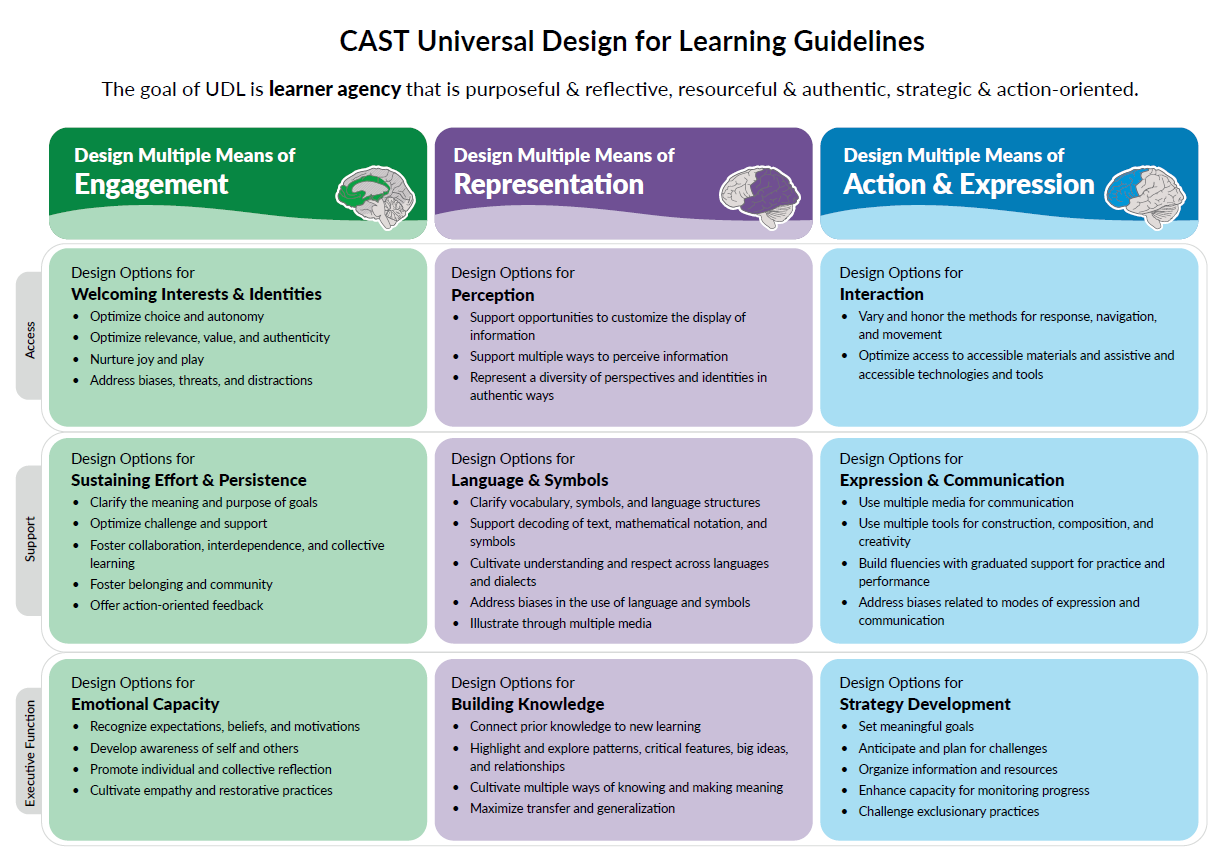
CAST (2024): Universal Design for Learning Guidelines version 3.0
Evidence of the Effectiveness of UDL in Educational Practice
Empirical research confirms that systematic and consistent implementation of UDL principles leads to significant improvements in students’ educational outcomes. Guo and Wang (2025) report a 37.4% increase in academic achievement among students in environments with high UDL implementation, with the greatest benefits observed among students with lower baseline engagement. In the field of educating students with developmental disabilities, UDL is effective in improving academic, social, and behavioral outcomes for learners with intellectual and developmental disabilities, particularly when digital and multisensory tools are used continuously in practice (AlRawi and AlKahtani, 2021).
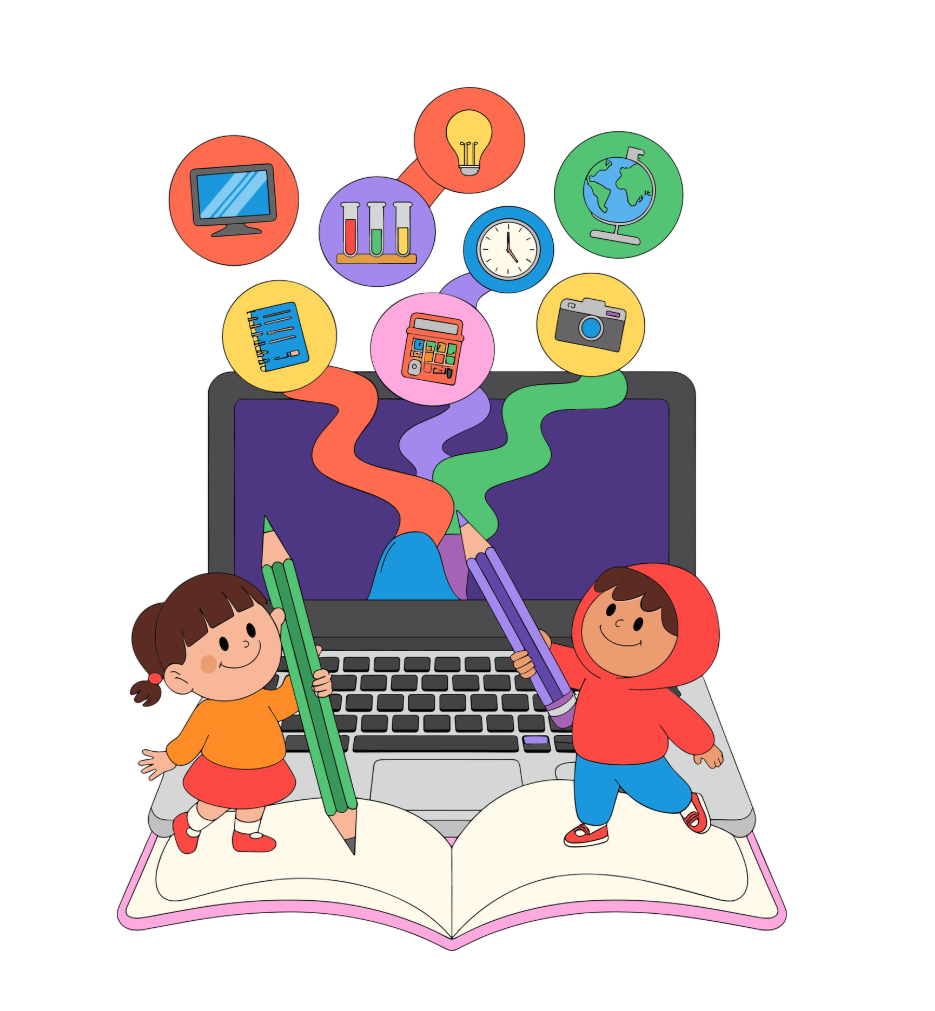
SENcastle as a Multimodal Sensory-Educational System
SENcastle is a multimodal device developed in collaboration with therapists to provide controlled, adaptable input to five sensory systems: visual, auditory, tactile, proprioceptive, and vestibular. It includes light elements with adjustable colors, the ability to record and playback messages and sounds, and vibratory, proprioceptive, and tactile components, as well as the option to create individually tailored sensory scenes. This structure makes SENcastle particularly suitable for children with autism spectrum disorder, ADHD, and sensory integration difficulties.
UDL Principle of Multiple Means of Representation and SENcastle
In the context of UDL, SENcastle strongly supports the principle of multiple means of representation by enabling content to be presented through a combination of visual, auditory, and tactile stimuli. Adjusting the intensity and type of stimulation is particularly important for learners with increased or reduced sensory sensitivity (Texas Education Agency, 2025). Multisensory scenes and interactive elements allow students to perceive content through the modality that is most accessible to them, which aligns with research showing that sensory-enriched environments improve information processing and comprehension in inclusive classrooms (Adams et al., 2025).
Multiple Means of Engagement and SENcastle
SENcastle increases student engagement through individually tailored, predictable, and motivating sensory activities. UDL emphasizes the importance of choice, self-regulation, and emotional safety in order to maintain high levels of attention and motivation (CAST, 2024). SENcastle enables flexible breaks, proprioceptive deep input, and calming sensory scenes, which have been shown to be particularly beneficial for learners with ADHD and autism (Middletown Autism, 2024). Personalized audio messages and themed activities further reduce anxiety and promote users’ intrinsic motivation (Kaltman, 2024).
Multiple Means of Action and Expression and SENcastle
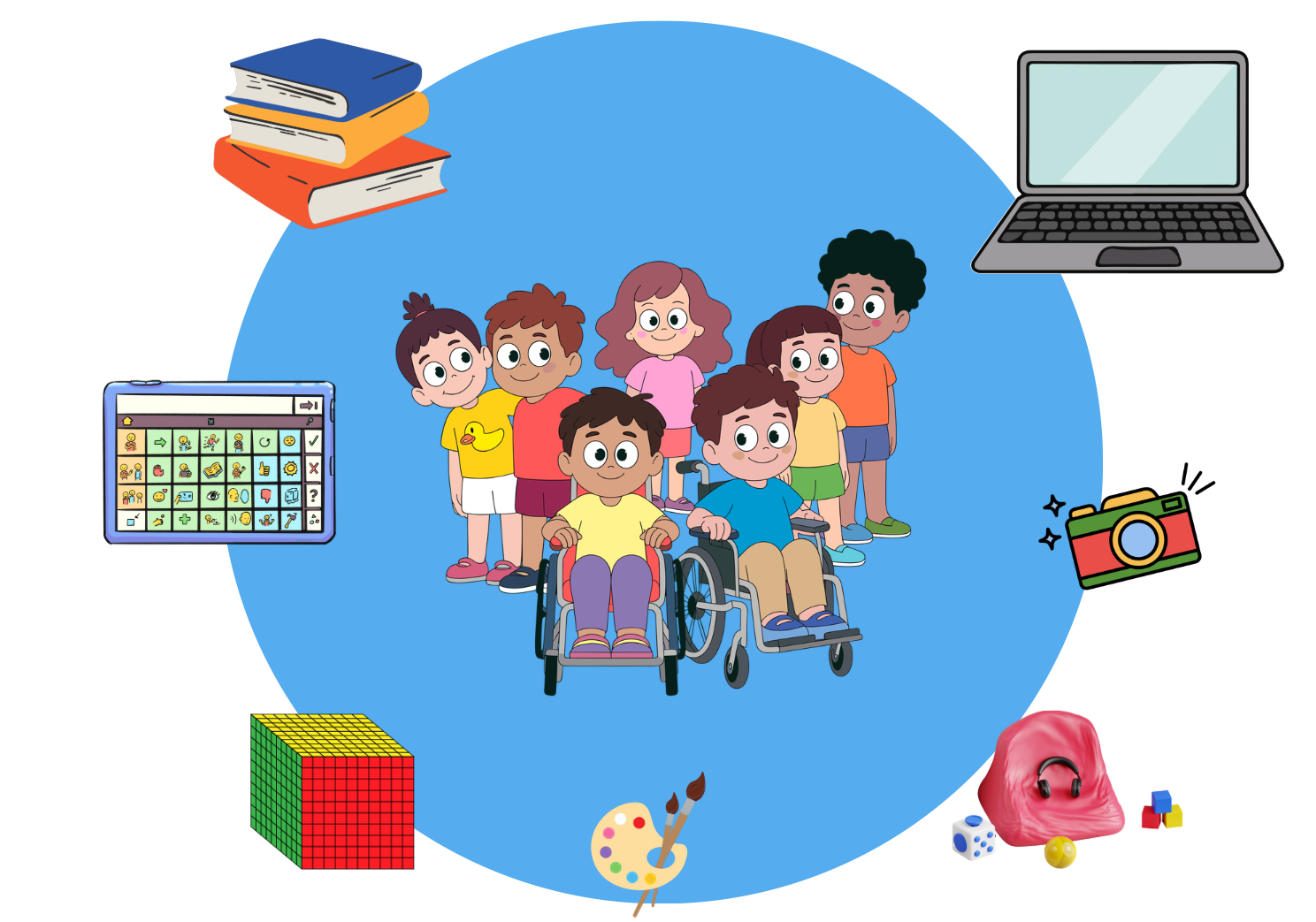
As a combination of assistive technology and sensory integration, SENcastle enables students to express themselves and demonstrate knowledge through touch, movement, activation of sensory elements, and cause-and-effect interactions. This is further supported by the fact that different SENcastle models provide different access and control options. For example, SENcastle Access enables wheelchair users to use the tabletop version of SENcastle and thus gain the full sensory experience. In addition, this model supports switch and eye-gaze control, providing a high level of inclusivity and accessibility. These forms of expression are particularly important for students with motor or speech difficulties, for whom traditional evaluation methods often pose a barrier (Kapil and Kaur, 2025). Integrating SENcastle within a UDL approach supports the development of independence, a sense of competence, and social skills, which are among the key goals of inclusive education (AlRawi and AlKahtani, 2021).
The Future of Integrating UDL and SENcastle
The integration of UDL and the SENcastle system represents a modern, inclusive approach in which sensory-educational tools are not intended exclusively for students with developmental disabilities but are instead a standard part of the educational environment for all learners. Such an approach contributes to more equitable education, reduces stigma, and supports broader acceptance of diversity among students (Adams et al., 2025). Although further longitudinal research is needed, existing evidence strongly supports the role of SENcastle in implementing UDL principles in practice (Guo and Wang, 2025).
References:
Adams, D. , Dargue, N., Malone, S., Carroll, A. and Simpson, K. (2025): Are sensory aspects of the built school environment associated with learning or well-being outcomes for autistic students? A systematic review International Journal of Inclusive Education. 1-27.
AlRawi, J. M. and AlKahtani M. A. (2021): Universal design for learning for educating students with intellectual disabilities: a systematic review. International Journal of Developmental Disabilities, 68, 6, 800-808.
CAST (2018): Universal Design for Learning Guidelines version 2.2. CAST Professional Publishing.
CAST. (2024): UDL Guidelines 3.0. https://udlguidelines.cast.org
Guo, P. and Wang, Z. (2025): Implementation fidelity of universal design for learning and effects on student achievement engagement and belonging. Scientific Reports, 15.
Kaltman, L. (2024): Universal Design for Learning in special education. https://www.kaltmanlaw.com/post/what-is-udl-in-special-education/
Kapil Y. and Kaur, S. (2025): Integrating assistive technology into instructional strategies for learners with sensory disabilities: a universal design for learning approach. International Journal Advanced Research, 13, 2, 1468-1472.
Meyer, A., Rose, D. H., & Gordon, D. (2014): Universal Design for Learning: Theory and practice. CAST.
Middletown Autism (2024): Supportive sensory practices. https://early-years.middletownautism.com/sensory/supportive-sensory-practices/
Texas Education Agency. (2025): Universal Design for Learning (UDL) guidelines. https://tea.texas.gov/academics/special-student-populations/special-education/universal-design-for-learning-udl-guidelines